
CLIA HSV 1+2
in human serum or plasma
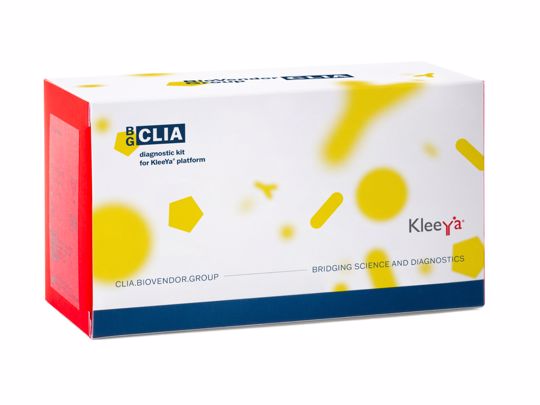
Herpes simplex virus (HSV) types 1 and 2 are members of the Herpesviridae family. Infection with HSV is common among the population. HSV transmission most frequently occurs through direct contact with a lesion or mucosal surface, or mucosal contact with genital or oral secretions containing the virus. Vertical transmission from mom to baby can also occur perinatally. HSV1/2 infection tends to persist permanently in the organism and may also be reactivated under certain conditions (stress, reduced immunity).
HSV-1 infections are most frequently associated with orolabial lesions, primary infection of HSV-1 generally occurs already during childhood, however, an increase in genital HSV-1 infections has been reported. HSV-2 infections are mostly genital in location, it is one of the most common venereal diseases which result in the formation of lesions in the genital mucosa. The infection of a child through cervical secretions during childbirth may occur. One of the most serious forms of HSV infection is herpetic encephalitis. HSV infections belong to the TORCH syndrome.
Laboratory tests used to diagnose HSV infections are PCR and serological tests. Measurements of the specific IgA, IgM, and IgG antibodies are used to detect the infection and determine its stage or reactivation.
Products
Advantages
- Detection of IgG or IgM antibodies to Herpes Simplex Viruses 1 and 2 (HSV 1+2)
- Screening of HSV infection, determining whether a patient has been previously exposed to HSV 1 or 2
- Infection staging
- Intended for human serum, citrate plasma
- A mixture of inactivated and purified HSV-1 and HSV-2 strains used
- For each CLIA kit a corresponding control set is available
| Assay stability | 30 days in-board-stability / in-use-stability until the expiration date at storage temperature 2-8 °C |
| Sample matrix | Serum, Plasma |
| Assay/kit content | Reagent Cartridge with specific reagents for the assay, magnetic particles, calibrators |