
CLIA Sm
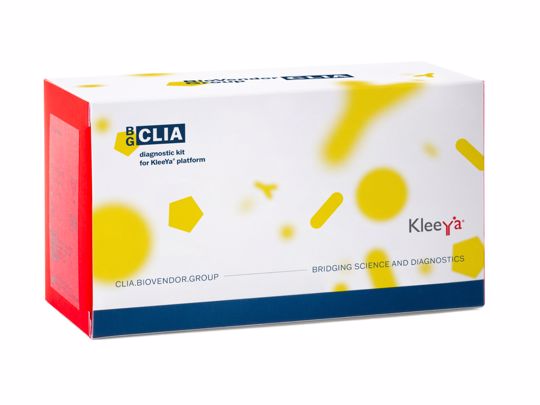
Sm is a small nuclear ribonucleoprotein composed of several protein autoantigens designated B, B1, D, E, F, and G, which range in size from 11 kD to 26 kD. Sm is a part of the U1-snRNP ribonucleoprotein complex, also known as Sm/RNP complex. Sm (Smith) antigen, the ribonucleoprotein nucleus is common to all snRNPs. Antibodies to Sm antigen and U1-snRNP specific proteins (RNP 68, RNP A, RNP C) are often found together.
Anti-Sm antibodies are highly specific for systemic lupus erythematosus (SLE). They are found in 20–30% of patients with SLE and represent an important tool in SLE serological diagnostics. Anti-Sm antibody levels remain relatively constant over time in patients with SLE and usually occur in patients who also have U1-snRNP antibodies.
Antigen Used: Native Sm antigen.
Advantages
- Detection of anti-Sm antibodies, IgG class
- Diagnosis of systemic lupus erythematosus (SLE)
- Evaluating patients with signs and symptoms of a connective tissue disease and positive test for antinuclear antibodies
- Intended for human serum and plasma
- Native Sm antigen used
- The kits are CE-IVD certified and intended for professional use
- For each CLIA kit a corresponding control set is available
| Assay stability | 30 days in-board-stability / in-use-stability until the expiration date at storage temperature 2-8 °C |
| Sample matrix | Serum, Plasma |
| Sample volume | 10 µL |
| Measuring range | 0,5-320 U/ml |
| Assay/kit content | Reagent Cartridge with specific reagents for the assay, magnetic particles, calibrators |