
CLIA CRP wide-range
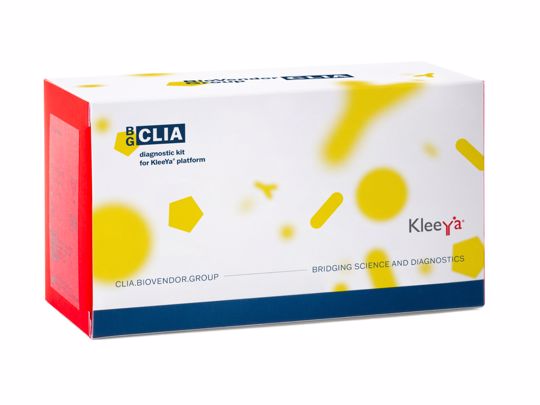
C-reactive protein (CRP) is an acute inflammatory protein that increases up to 1,000-fold at sites of infection or inflammation. CRP is accepted in clinical use as a major, although rather non-specific, marker of local or systemic inflammation, bacterial infection, and sepsis.
Changes in the concentration of CRP are used to help evaluate for acute bacterial or fungal infections, identify postoperative complications, and monitor chronic inflammatory conditions such as autoimmune diseases, certain types of arthritis, and IBD. They also help evaluate the response to antibiotic treatment of bacterial infections and therapy in people with chronic inflammation.
In patients with COVID-19, admission CRP correlated with disease severity and tended to be a good predictor of adverse outcomes.
The inflammation process plays a key role in the pathogenesis of atherosclerosis, development of arterial hypertension, heart failure, valvular disease, and atrial fibrillation. The formation of cholesterol-rich plaque inside arteries is the root cause of most heart attacks and strokes.
CRP has long been recognized as an inflammatory marker and suspected of playing a role in the atherosclerotic process. Recent guidelines recommend high sensitivity CRP testing for primary CVD prevention, stratifying CVD risk groups, and select patients for statin therapy. It can also be used to prognosticate complications of CVD itself and to evaluate treatment efficacy. The CDC/AHA guidelines support the use of CRP in primary prevention and set cutoff points according to relative risk categories: low risk (<1.0 mg/L), average risk (1.0-3.0 mg/L), and high risk (>3.0 mg/L).
Products
| Product | Size | Article no. | |
|---|---|---|---|
|
100 Tests
|
Article no.: 71038 | Request |
Advantages
- Accurate measuring both low and high levels of CRP (wide range)
- Detect infection and differentiate between active and inactive disease forms with concurrent infection
- Predict disease outcome in patients with COVID-19
- Assess response to antibiotic treatment of bacterial infections
- Assess cardiovascular disease risk and therapeutic outcomes in primary CVD prevention
- Helps in vascular disease prediction
- For each CLIA kit a corresponding control set is available
| Assay time | 30 min |
| Assay stability | 30 days in-board-stability / in-use-stability until the expiration date at storage temperature 2-8 °C |
| Sample matrix | Serum, Plasma |
| Sample volume | 15 µL |
| Measuring range | 0,5-360 mg/l |
| Assay/kit content | Reagent Cartridge with specific reagents for the assay, magnetic particles, calibrators |