
CLIA Cystatin C
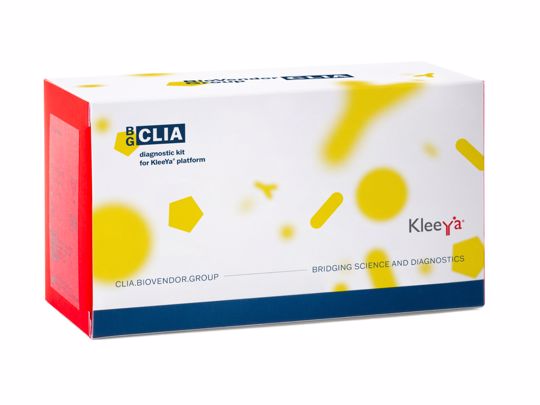
Cystatin C is a small protein ubiquitously expressed at a constant rate and freely filtered by the glomerulus. The CKD-EPI cystatin C equation demonstrated a good correlation with measured GFR in patients with all common causes of kidney disease, including kidney transplant recipients. Cystatin C estimated GFR (eGFR) may have advantages over creatinine eGFR in certain patient groups in whom muscle mass is abnormally high or low. Currently, cystatin C is a biomarker recommended by NICE and KDIGO guidelines for the diagnosis and treatment of CKD.
Chronic Kidney Disease
Chronic kidney disease has become a global health burden. The modern classification of kidney function is based on eGFR, which classifies CKD into five stages. In clinical routine, serum creatinine is an established screening test of kidney function, but it is insensitive to small changes in GFR and fails to detect an early decline in a patient’s glomerular filtration rate. Up to 50 % of kidney function can be lost before significant Creatinine levels become detectable. KDIGO and NICE recommend cystatin C to diagnose patients in the CKD stage 2 and 3 correctly.
Acute Kidney Injury
Blood levels of cystatin C also equilibrate more quickly than creatinine, and therefore, serum cystatin C may be more accurate than serum creatinine when kidney function is rapidly changing. Therefore, Cystatin C is a more sensitive marker for AKI compared to Creatinine and Cystatin C does not have a blind area.
Products
| Product | Size | Article no. | |
|---|---|---|---|
|
100 Tests
|
Article no.: 71040 | Request |
Advantages
- Inversely correlates with the glomerular filtration rate (GFR), that is elevated levels of cystatin C indicate decreased GFR.
- Detection of chronic kidney disease (CKD) in adults -Monitoring of CKD therapy and/or progression in adults
- For each CLIA kit a corresponding control set is available
| Assay time | 15 min |
| Assay stability | 30 days in-board-stability / in-use-stability until the expiration date at storage temperature 2-8 °C |
| Sample matrix | Serum |
| Sample volume | 10 µL |
| Measuring range | 5-80 ng/ml |
| Assay/kit content | Reagent Cartridge with specific reagents for the assay, magnetic particles, calibrators |