
CLIA Jo-1
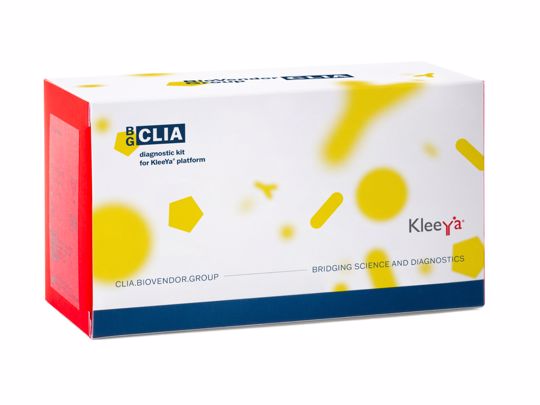
Jo-1 antigen is a histidyl-tRNA synthetase enzyme localized mainly in the cytoplasm. It is a member of the amino acyl-tRNA synthetase family of enzymes found in all nucleated cells. Anti-Jo-1 antibodies are highly specific for myositis. They are associated with polymyositis (20-40%). Less frequently, these antibodies are also found in dermatomyositis and myositis related to other connective tissue systemic diseases.
Anti-Jo-1 antibodies occur in up to 50% of patients with interstitial pulmonary fibrosis and symmetrical polyarthritis. More than 70% of patients positive for Jo-1 antibodies have interstitial lung disease. The anti-Jo-1 antibodies level corresponds with the disease activity.
The antisynthetase syndrome comprises presence of anti-Jo-1 antibodies, myositis, interstitial lung disease, rheumatoid arthritis, or Raynaud's phenomenon. The disease manifestation differs depending on the type of anti-synthetase antibody (most often anti-Jo-1 antibody).
Antigen Used: Recombinant Jo-1 antigen.
Advantages
- Detection of anti-Jo-1 antibodies, IgG class
- Evaluating patients with signs and symptoms compatible with a connective tissue disease, especially muscle pain and limb weakness, concomitant pulmonary signs and symptoms, Raynaud phenomenon, and arthritis
- Testing for antibodies to Jo 1 is not useful in patients with a negative test for antinuclear antibodies
- Intended for human serum and plasma
- Recombinant Jo-1 antigen used as the antigen
- The kits are CE-IVD certified and intended for professional use
- For each CLIA kit a corresponding control set is available
| Assay stability | 30 days in-board-stability / in-use-stability until the expiration date at storage temperature 2-8 °C |
| Sample matrix | Serum, Plasma |
| Sample volume | 10 µL |
| Measuring range | 0,5-320 U/ml |
| Assay/kit content | Reagent Cartridge with specific reagents for the assay, magnetic particles, calibrators |