
CLIA VZV
in human serum or plasma
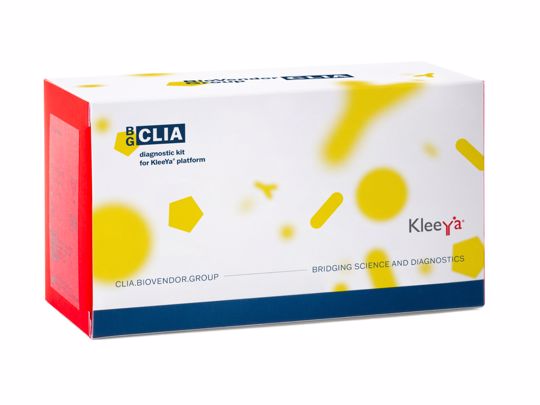
Varicella zoster virus (VZV, HHV-3) is a Herpetoviridae family virus, it is transmitted by means of droplet infection. The virus tends to persist latently in the organism. Primary occurs mainly in childhood and infection causes chicken pox, varicella, while reactivation produces shingles, herpes zoster. The disease usually terminates without any lasting effects. Primary infection in adolescents and adults can be with serious complications, like encephalitis, pneumonia, and hepatitis. VZV can be transmitted through placenta to the foetus and cause severe congenital defects. Maternal infection of seronegative female in late gestation presents serious risk for a newborn.
Serological methods are used for the detection of specific IgA, IgM, and IgG (avidity) antibodies to VZV in laboratory diagnosis of the infection.
Specific IgG mostly remain in reduced levels throughout the entire life of the infected person, they have anamnestic character and serve for patient immunological status assignment. Specific IgG antibodies IgG avidity determination is used for discrimination between primary infection and past infection or reactivation.
Antibodies of IgM and IgA class are a sign of an active infection (primary infection and reactivation) and disappear during convalescence. Rarely they can persist for several months.
Products
Advantages
- Detection of IgG, IgA or IgM antibodies to Varicella Zoster Virus VZV)
- Detection of VZV infection
- Disease staging
- Intended for human serum, citrate plasma
- Purified and inactivated antigen VZV with a high content of specific immunodominant epitopes used
- For each CLIA kit a corresponding control set is available
| Assay stability | 30 days in-board-stability / in-use-stability until the expiration date at storage temperature 2-8 °C |
| Sample matrix | Serum, Plasma |
| Assay/kit content | Reagent Cartridge with specific reagents for the assay, magnetic particles, calibrators |